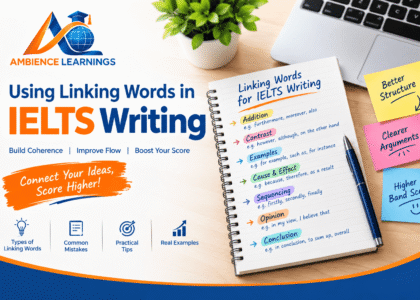

Learning English has become an essential part of education, career development, and personal growth. In today’s competitive world, strong English communication skills can help students, job seekers, and working professionals explore new opportunities and communicate confidently.
English is widely used in education, business, technology, international communication, and professional environments. Whether you are preparing for IELTS, TOEFL, studying abroad, or planning to advance your career, improving your English language skills can be a valuable investment in your future.
However, learning English is not just about memorising grammar rules or expanding your vocabulary. It is about developing the ability to understand, speak, read, and write the language confidently in everyday situations.
If you are wondering how to improve your English language skills, this blog covers practical tips and habits that can help you make consistent progress.
Why Is Learning English Important?
English plays an important role in academic and professional communication. Many universities use English as the medium of instruction, while several international organisations use it to communicate with clients, colleagues, and business partners.
For students planning to study abroad, English proficiency tests such as IELTS and TOEFL are often required to demonstrate language ability, depending on the institution and programme.
Similarly, professionals with good communication skills may find it easier to participate in meetings, attend interviews, deliver presentations, and interact with customers.
Developing English proficiency can help you:
-
Communicate more confidently in academic and professional settings.
-
Prepare for English proficiency examinations such as IELTS and TOEFL.
-
Improve your performance in interviews and presentations.
-
Participate in conversations with people from different backgrounds.
-
Access a wider range of educational and professional resources.
The key is to practise regularly and focus on using English in practical situations.
1. Read Every Day to Improve Your Vocabulary
Reading is one of the most effective ways to become familiar with English. It introduces you to new vocabulary, sentence structures, grammar patterns, and different writing styles.
You do not need to begin with complicated books or lengthy newspapers. Start with material that matches your current English level.
You can read:
-
English newspapers and online articles.
-
Short stories and novels.
-
Blogs related to your interests.
-
Educational magazines and informative websites.
-
IELTS reading passages and practice materials.
While reading, identify unfamiliar words and try to understand their meanings from the context. Write down useful expressions and practise using them in your own sentences.
For example, instead of simply memorising the word “beneficial,” learn how to use it naturally:
“Regular English practice is beneficial for improving communication skills.”
Tip: Spend 15–20 minutes reading English every day. Consistency is more useful than trying to read a large amount of material in one sitting.
2. Overcome Shyness and Start Speaking English
One of the biggest challenges for English learners is hesitation. Many people understand English but feel nervous when they have to speak it.
They may worry about making grammatical mistakes, pronouncing words incorrectly, or being judged by others.
The best way to overcome this hesitation is through regular speaking practice.
Start by speaking English with friends, classmates, colleagues, or anyone comfortable practising with you. Choose simple topics such as your daily routine, hobbies, education, favourite movies, or future plans.
You can also practise speaking in front of a mirror or describe your surroundings in English.
Remember, making mistakes is a natural part of learning. Instead of avoiding conversations, use them as opportunities to identify areas for improvement.
As you practise regularly, you can gradually become more comfortable expressing your thoughts.
3. Maintain an English Diary and Think in English
Writing a daily diary is a simple way to improve your vocabulary, sentence formation, and overall understanding of English.
At the end of each day, write a few sentences about your activities, experiences, or thoughts.
For example:
“Today, I attended my English class. We practised conversations about travelling. I learned five new words and used them while speaking with my classmates.”
Start with short, simple sentences. As your confidence improves, try writing longer paragraphs and expressing more complex ideas.
Another useful habit is to think in English.
Instead of translating every sentence from your native language, try describing simple activities mentally in English.
For example, while preparing breakfast, you might think about the ingredients, the steps involved, or what you plan to do next.
This practice can help you become more familiar with English sentence structures and reduce hesitation during conversations.
4. Practise Listening and Learn Natural Expressions
Listening is an important part of learning any language. It helps you understand pronunciation, sentence rhythm, intonation, and how people use English in real conversations.
You can improve your listening skills by watching English videos, listening to podcasts, or following educational channels.
Some useful resources include:
-
English news broadcasts.
-
Podcasts for English learners.
-
Interviews and educational videos.
-
English films and television programmes.
-
IELTS listening practice materials.
Initially, choose videos with subtitles to understand the conversation. Gradually, try listening without subtitles to improve your ability to recognise words and expressions.
Pay attention to how speakers pronounce words, connect sounds, and express emotions.
You can also pause a video and repeat a sentence aloud. This technique, often called shadowing, can help you practise pronunciation, rhythm, and fluency.
5. Practise Speaking with Other English Learners
You do not need to find a native English speaker to improve your communication skills. Practising with other learners can also be helpful.
Join an English-speaking group, participate in classroom discussions, or create a small practice group with friends.
Choose a topic and allow each person to speak for two or three minutes.
For example, you could discuss:
-
The advantages and disadvantages of social media.
-
The importance of education.
-
Online learning versus classroom learning.
-
The role of technology in everyday life.
-
Your career goals and ambitions.
These activities encourage you to organise your thoughts, listen to different opinions, and respond naturally.
For IELTS candidates, group discussions and speaking exercises can also provide useful preparation for expressing opinions and developing answers.
6. Focus on Grammar, Pronunciation, and Fluency
Good English communication involves more than knowing a large number of words. You also need to use those words correctly and speak in a way that others can understand.
Focus on improving three important areas.
Grammar: Learn basic sentence structures, tenses, articles, prepositions, and subject-verb agreement. Practise using grammar in complete sentences rather than memorising rules alone.
Pronunciation: Pay attention to word stress, individual sounds, and sentence intonation. Listening to English speakers and repeating their sentences can help you develop clearer pronunciation.
Fluency: Practise speaking continuously on familiar topics. Do not stop after every sentence to correct minor mistakes. Instead, focus on communicating your ideas clearly while gradually improving accuracy.
For IELTS Speaking, remember that the goal is understandable, natural communication rather than copying a particular accent.
7. Expand Your Vocabulary in Context
Learning new words is important, but memorising long vocabulary lists without understanding how words are used can be ineffective.
Whenever you learn a new word, note its meaning, pronunciation, and an example sentence.
For example:
Word: Opportunity
Meaning: A favourable situation or chance to do something.
Example: Learning English can create new opportunities for education and employment.
Try to learn a few useful words every day and use them in conversations or writing.
You should also learn common phrases and collocations, which are words that naturally occur together.
For example, we say “make a decision,” “take responsibility,” and “gain experience.”
Learning expressions in context can make your English sound more natural.
8. Consider Joining Professional English Speaking Classes
Self-study is valuable, but some learners benefit from structured training, expert guidance, and regular feedback.
English speaking classes can provide opportunities to practise conversations, improve grammar, develop pronunciation, and participate in presentations and group discussions.
A structured course may also help learners identify their weaknesses and follow a systematic learning plan.
If you are preparing for IELTS, consider a course that includes speaking practice, mock tests, individual feedback, and guidance on the examination format.
Choose a training programme that matches your current proficiency level and learning objectives.
Conclusion
Improving your English language skills requires patience, consistency, and practical application. Reading regularly, listening to English, speaking with others, maintaining a diary, and expanding your vocabulary can all contribute to your progress.
Whether your goal is to prepare for IELTS, study abroad, perform better in interviews, or communicate confidently at work, developing English proficiency can support your academic and professional journey.
Start with small, achievable goals and make English a part of your daily routine.
Remember, you do not need to speak perfect English to communicate effectively. Focus on speaking clearly, learning from your mistakes, and practising consistently.
With the right approach and regular effort, you can gradually develop the confidence and skills needed to communicate effectively in English.